

What Is Fibre, and Why Is Everyone Suddenly Talking About It?
A practical, no-nonsense guide to hitting your fibre target — and the everyday foods that make it easy.
Fibre has quietly become one of the most talked-about nutrients in nutrition science. Found naturally in plants — fruit, vegetables, whole grains, nuts, seeds and legumes — fibre is the part of plant food our bodies can't fully digest. Instead of being broken down and absorbed like other nutrients, it passes largely intact through the digestive system, feeding gut bacteria and helping to regulate digestion along the way.
It might sound unremarkable, but the evidence linking fibre to long-term health keeps growing. Higher fibre intake has been associated with a lower risk of heart disease, type 2 diabetes and bowel cancer, alongside better cholesterol levels, steadier blood sugar and improved appetite regulation. Yet the UK's recommended daily intake of 30g is one that the vast majority of adults never reach.
The Different Types of Fibre — and Why Variety Matters
Not all fibre works the same way, which is why eating a wide variety of plant foods matters more than fixating on a single 'fibre-rich' ingredient. Broadly, there are three types worth knowing:
● Soluble/prebiotic fibre — found in garlic, onions, oats and asparagus. It's fermented by gut bacteria into short-chain fatty acids that support the gut lining and help calm inflammation.
● Viscous fibre — found in oats, barley and chia seeds. It forms a gel in the gut that slows glucose absorption and binds bile acids, which can help lower cholesterol.
● Insoluble fibre — found in whole grains, nuts and the skins of fruit and vegetables. It adds bulk and helps keep digestion moving at a healthy pace.
Most whole foods naturally contain a mix of all three, which is one of the best arguments for eating fibre from real, whole ingredients rather than relying on a single fortified product.
The 30g Target — and Why 'Five a Day' Isn't Enough
A common misconception is that hitting your five portions of fruit and vegetables automatically covers your fibre needs. In reality, five a day typically provides only around 10g of fibre — roughly a third of the 30g target. Closing that gap means thinking beyond fruit and veg alone, and building fibre into every meal rather than trying to cram it into one.
Simple, sustainable swaps make a real difference: choosing wholegrain bread and pasta over white, keeping the skin on potatoes, stirring a tin of beans or lentils into a sauce, and snacking on nuts, seeds or dried fruit instead of processed alternatives.
Watch Out for 'Fibre-Washed' Products
As with 'high protein' before it, food manufacturers have caught on to fibre's popularity — and not always for the right reasons. Ultra-processed snacks and drinks are increasingly marketed with fibre claims, even when the fibre has simply been added as an isolated powder rather than coming from a whole food source. Nutritionists are consistently clear on this point: a fibre-fortified crisp or energy drink is not nutritionally equivalent to a bowl of lentils or a handful of raspberries, which also deliver vitamins, minerals and antioxidants alongside their fibre.
It's also worth understanding on-pack labelling. To claim 'source of fibre', a product needs 3g of fibre per 100g; to claim 'high fibre', it needs 6g per 100g. Because this is measured per 100g rather than per portion, a small snack bar can technically qualify as 'high fibre' while delivering only a couple of grams per serving. Reading beyond the front-of-pack claim is worth the extra ten seconds.
Easy, Everyday Ways to Boost Your Fibre Intake
You don't need an elaborate meal plan to hit 30g a day — small, consistent changes across breakfast, lunch and dinner add up quickly. A few ideas to get started:
● Top your morning porridge or yoghurt with chia seeds, flaxseed, nuts and berries
● Add a tin of beans or lentils to soups, stews and pasta sauces
● Snack on raw nuts and dried fruit instead of processed crisps
● Choose wholegrain bread, pasta and crackers as your everyday default
● Keep the skins on potatoes, apples and other fruit and veg where possible
● Reach for naturally fermented, gut-friendly drinks such as kefir or kombucha alongside your fibre intake, to support the wider microbiome
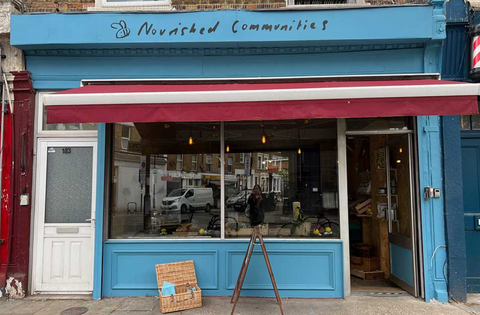
Building a Fibre-Rich Kitchen with Nourished Communities
The good news is that eating more fibre doesn't have to mean overhauling your diet — it's about stocking your kitchen with the right everyday staples. A few places to start:
● Tinned Jars & Beans, including Bold Bean Co jars, are one of the simplest ways to add fibre and plant protein to any meal — just stir into a sauce, soup or salad.
● Nuts & Dried Fruit make an easy, naturally fibre-rich snack to keep at your desk or in your bag.
● Granola and wholegrain breakfast staples are a fibre-friendly way to start the day.
● Seasonal Vegetable Boxes bring a rotating variety of fresh, fibre-rich produce straight to your door — an easy way to widen the range of fibre types in your diet.
● Gut Health drinks such as kefir, kombucha and kimchi complement a high-fibre diet by supporting the gut bacteria that ferment it.
● Crackers and wholegrain Pasta & Noodles are simple swaps that quietly raise your daily total without changing how you cook.
The Takeaway
Fibre isn't a fad — it's one of the most well-evidenced, low-effort changes you can make to your diet. Rather than chasing fortified products or one big fibre-heavy meal, focus on variety and consistency: a mix of legumes, whole grains, nuts, seeds, fruit and vegetables spread across the day. Small, whole-food swaps add up to a meaningful difference for your gut, your heart and your long-term health.
Ready to build a more fibre-friendly kitchen? Explore our range of pantry staples, fresh produce and gut-health favourites at Nourished Communities.



Comments (0)
There are no comments for this article. Be the first one to leave a message!